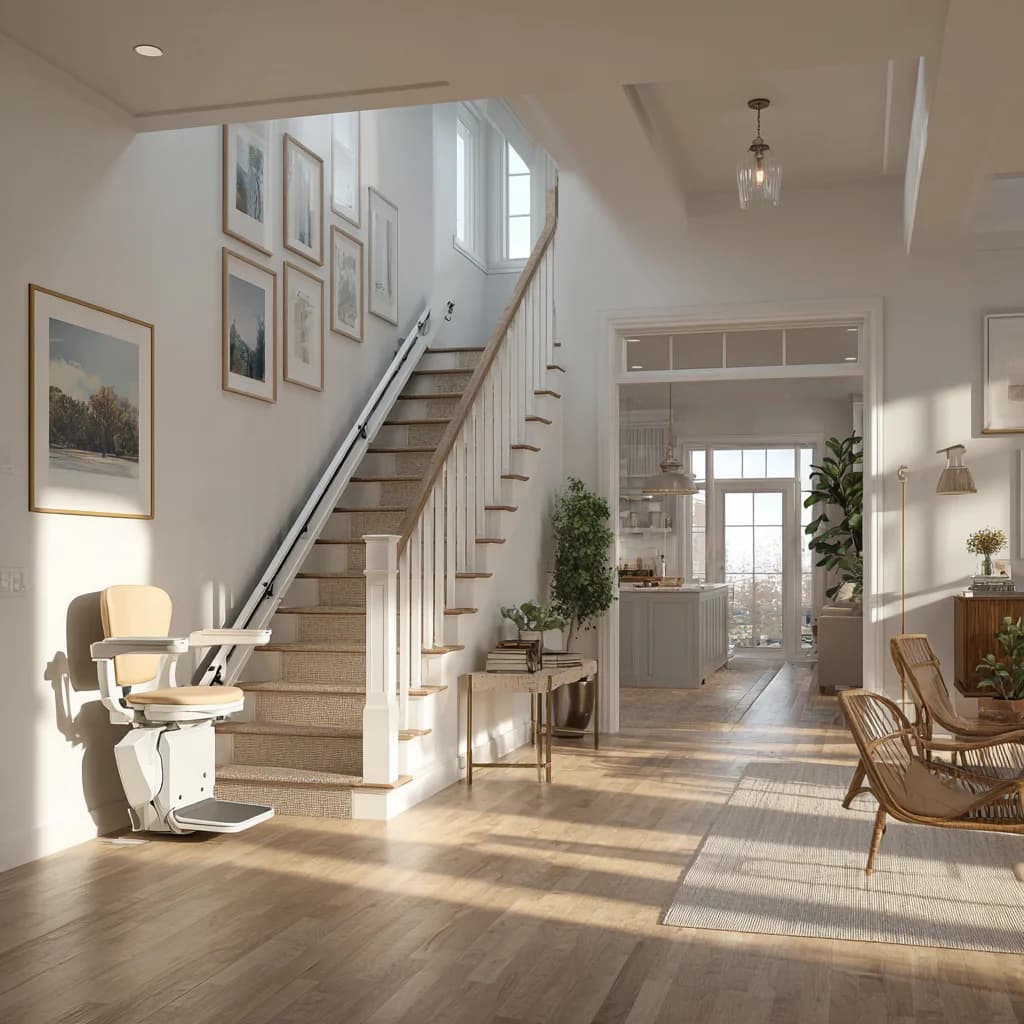
Stairlifts for Every NJ Home.
A straight staircase can usually be fitted within days, not weeks. We measure your actual stairs before quoting a dollar — no showroom guesses, no surprise change orders.
When the stairs become the reason you stop using half your house.
Most people don't call about a stairlift the day the stairs get hard. They call after months of sleeping in a recliner downstairs, skipping the laundry room, or getting up at 5 a.m. to take the stairs while there's still energy to do it safely.
A stairlift is the least invasive way to get the whole house back. It bolts to the stair treads — never the wall — so there is no structural work, no permit in most towns, and nothing that can't be removed later without a trace.
Signs it may be time
- Pausing halfway up, or pulling hard on the handrail to climb
- A recent fall on the stairs, or a near miss you haven't mentioned to anyone
- Sleeping downstairs, or avoiding a floor of the house entirely
- Carrying laundry or groceries up the stairs feels genuinely risky
- Returning home after a hip or knee replacement, or a cardiac event
- A spouse or adult child is now spotting them on the stairs
Recognize two or more? A free in-home assessment will tell you exactly what fits. No obligation.
Stairlift Options
We carry stairlift models for straight, curved, and outdoor applications.
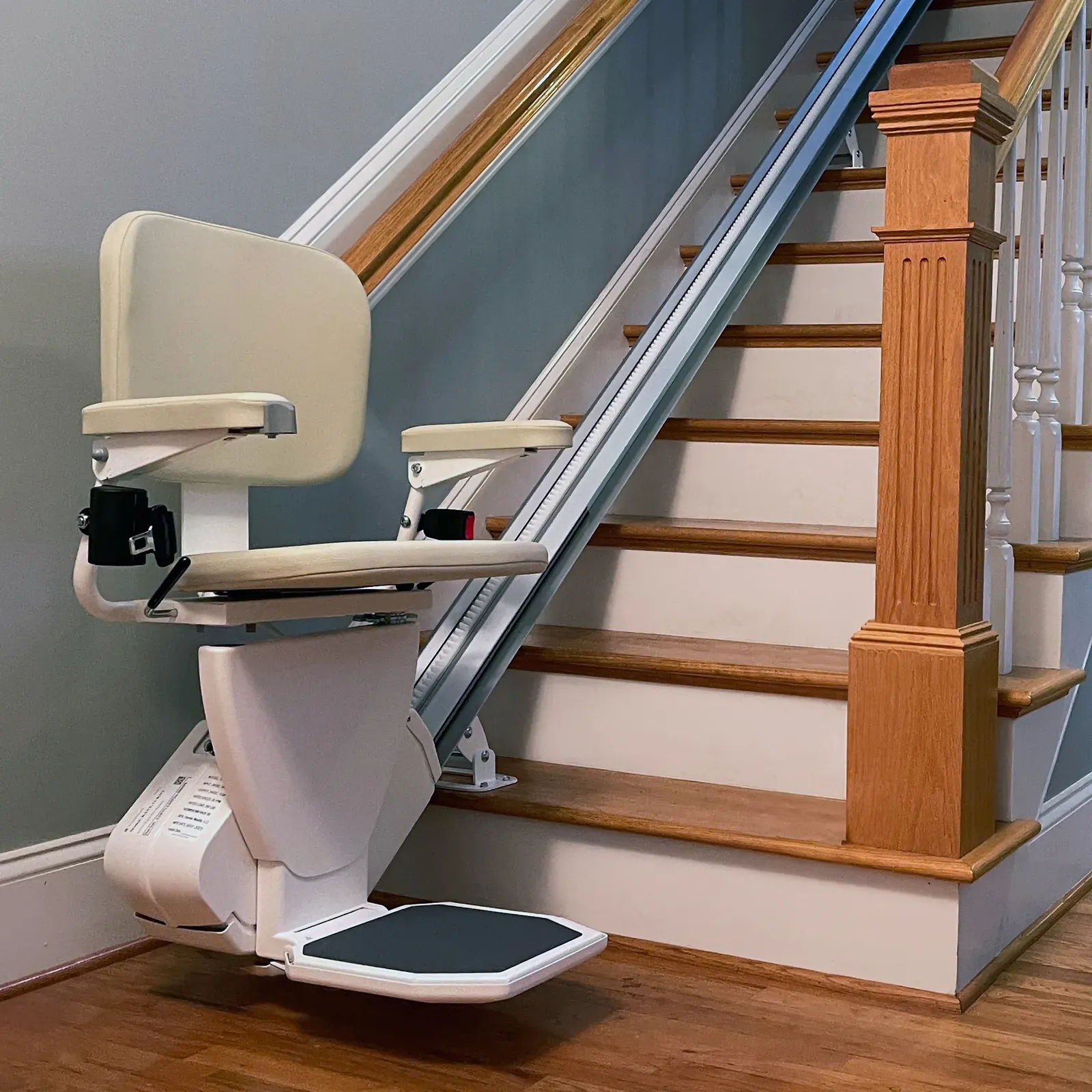
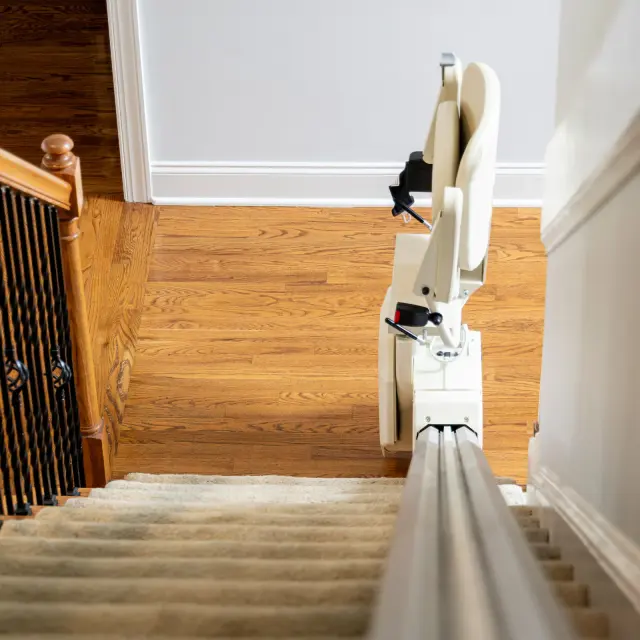
Straight Stairlift
NJ Install: 1-4 DaysOur most popular option with ultra-slim design keeps hallways clear for other users.
- Ultra-slim Design
- Extended Battery Life
- Swivel Seat for Ease of Exit
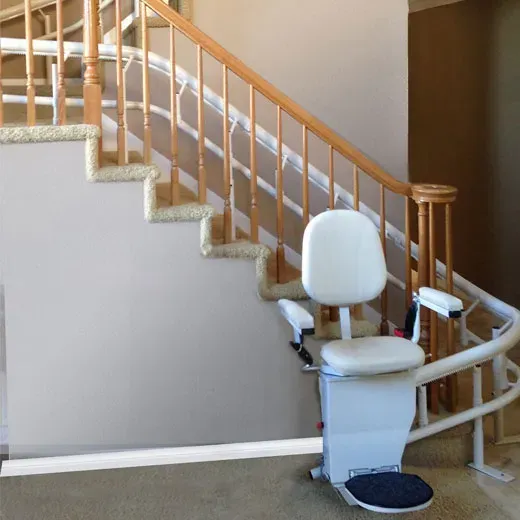
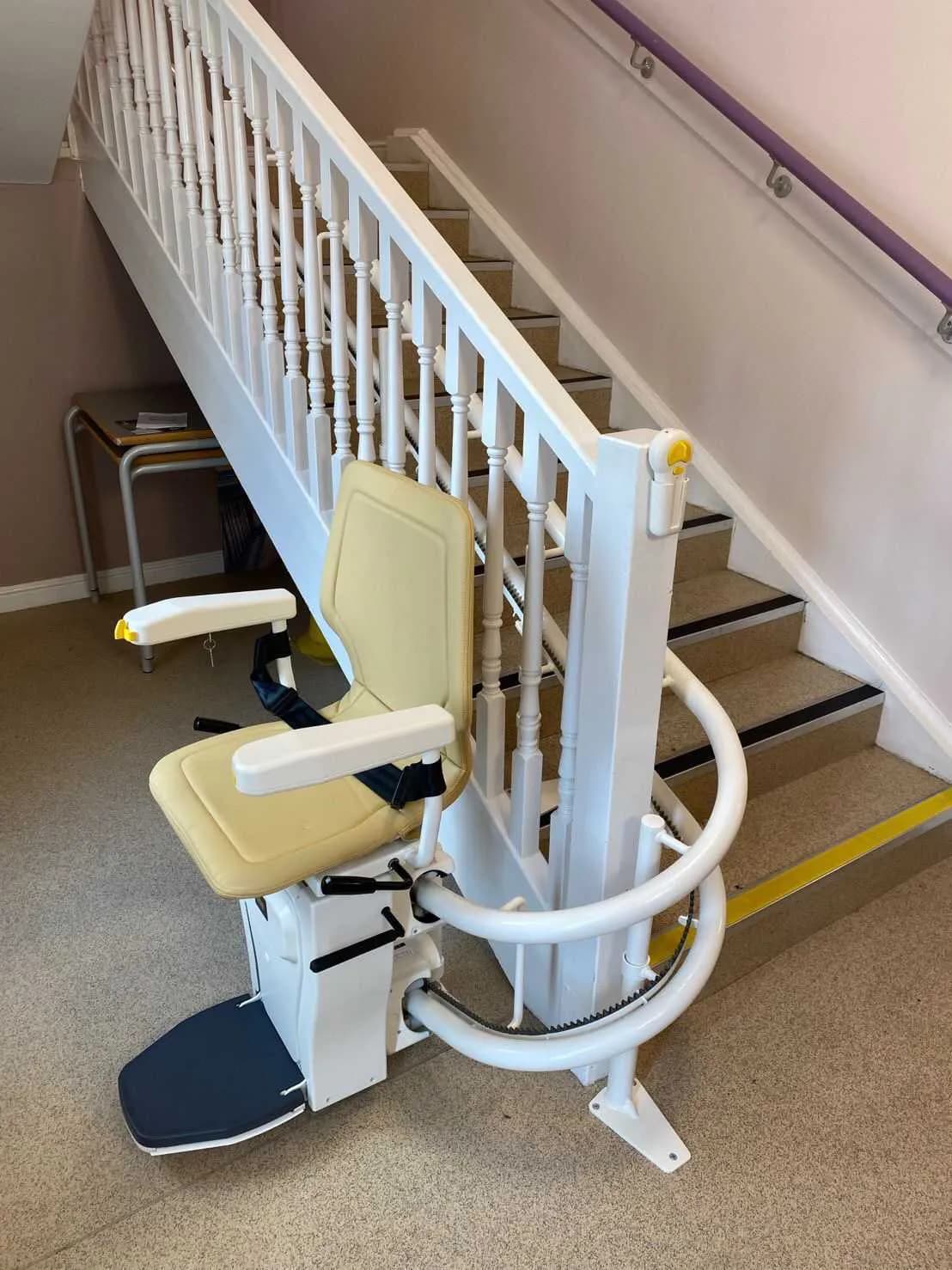
Curved Stairlift
NJ Install: 4 weeksCustom-bent rail for turning, tiered, and/or winding staircases. Each system is custom made to fit your home.
- Custom-molded rail
- Power swivel seat
- Battery backup
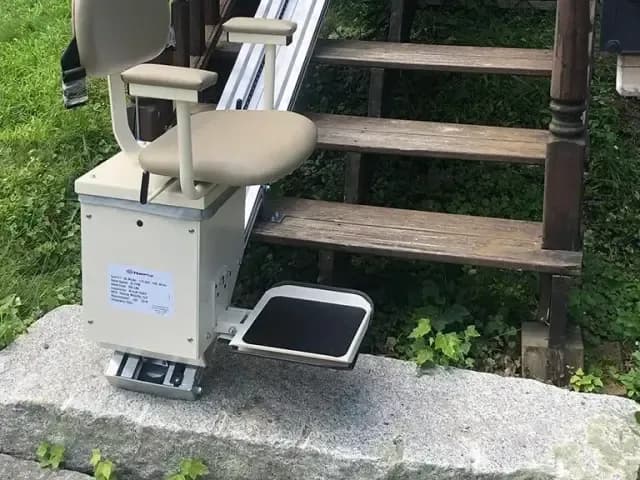
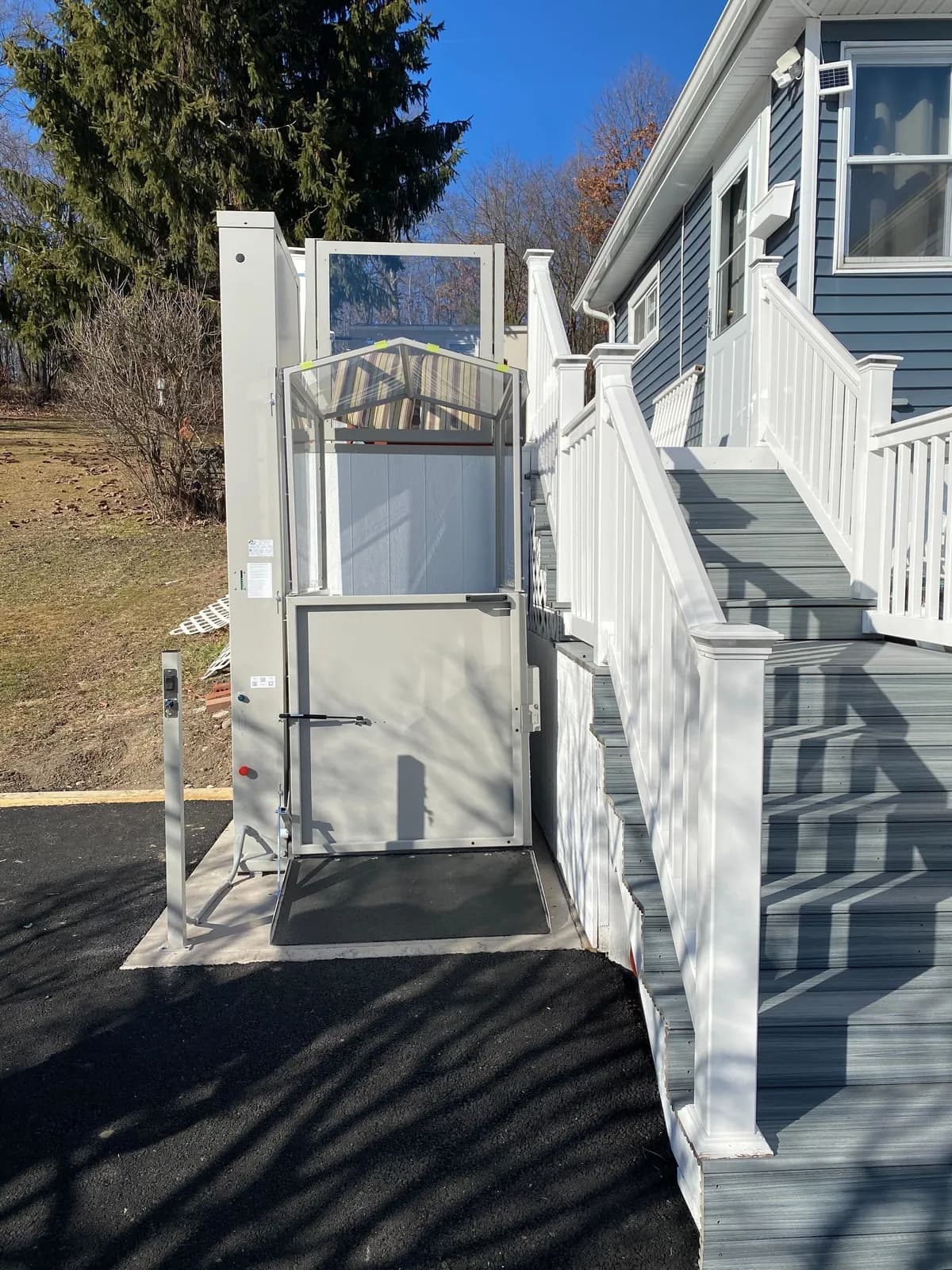
Outdoor Stairlift
NJ Install: 1-2 weeksOutdoor stair lifts includes weatherproof components and cover to protect it from the elements
- Ready for any season
- Compact design
- Additional security features
What a stairlift actually changes
The whole house, back
Your bedroom, your bathroom, your laundry. A stairlift is almost always cheaper than converting a downstairs room into a bedroom, and far cheaper than moving.
Falls stop being the daily risk
Stairs are where the serious falls happen. A seat, a belt, and a powered ride remove the single most dangerous trip in the house.
Works in a blackout
Battery-powered drive with continuous charging. If the power goes out mid-ride, the lift finishes the trip and keeps working for dozens more.
No renovation
The rail fastens to the treads, not your wall. Nothing structural, nothing to patch or repaint if the lift ever comes out.
Folds out of the way
Seat, footrest, and arms fold flat to roughly 13 inches. Everyone else uses the stairs normally.
Two remotes, either end
Call the lift from the top or bottom landing so it is never parked on the wrong floor when someone needs it.
The rail carries the load — your staircase barely notices.
A stairlift rail is fixed to the stair treads with brackets, spreading the load across several steps. Your wall is never used for support, which is why plaster, brick, and century-old lath all stop being a problem.
The carriage runs on a rack-and-pinion drive powered by two sealed batteries that charge whenever the chair parks. The ride is a steady, deliberate crawl with soft starts and stops, and it will not move unless the seat is in its locked, forward-facing position.
- Constant-pressure control — release the toggle and the lift stops instantly
- Safety edges on the footrest and carriage halt the lift if anything is in the path
- Seat belt standard; a retractable lap belt or full harness is available
- Swivel seat locks at the top landing so you step off onto flat floor, not a stair
Narrow treads, winders, and doors at the bottom of the stairs.
North Jersey housing stock is old, and it shows on the stairs. Jersey City and Hoboken brownstones give up 28-inch runs with a hard turn at the landing. Newark and Irvington two-families put a door directly at the foot of the stairs. Split-levels in Union and Springfield ask for a short six-step rail that most national chains do not want to bother with.
This is exactly why we measure in person. A photo cannot tell us that the newel post overhangs the bottom tread by two inches, and that is the detail that decides whether a standard rail fits or the job needs a hinged one.
- Hinged rail folds up to clear a doorway, hallway, or landing at the bottom
- Narrow-profile carriages fit staircases from about 28 inches of clear width
- Powered swivel and powered footrest for anyone who cannot twist comfortably
- Outdoor rails are marine-grade and weather-sealed for NJ winters
Which rail does your staircase need?
If your stairs run in one unbroken line from floor to floor, you need a straight rail. Anything with a bend, a landing, or a winder needs a curved rail — see the curved stairlift page.
| Feature | Straight | Outdoor | Curved |
|---|---|---|---|
| Best for | One unbroken flight, no turns | Porch steps, stoops, deck stairs | Landings, winders, 90° or 180° turns |
| Lead time | Often within a week | Within a week | 2–4 weeks (rail is built to measure) |
| Install time | 2–4 hours | 3–5 hours | Half to full day |
| Rail | Cut to length on site | Cut to length, weather-sealed | Custom-bent to your staircase |
| Removable later | Yes, no wall damage | Yes | Yes |
Not sure which you have? Stand at the bottom and look up. If you can see the top landing without the stairs bending out of view, it is a straight run.
From phone call to first ride
Straight answers on what shapes a stairlift quote
We do not publish figures, because a staircase we have not measured cannot be priced honestly. What we can tell you is exactly what moves the number, so nothing in the quote is a surprise. Every quote we give is the installed price — lift, rail, labor, and hauling the boxes away.
What moves the cost
Questions we get every week
Will a stairlift damage my walls or staircase?
No. The rail bolts to the stair treads, not the wall, and the brackets sit on the horizontal step surface. If the lift is removed later, you are left with small screw holes in the treads that fill and touch up easily. Nothing structural is altered.
How narrow can my staircase be?
Roughly 28 inches of clear width is the practical minimum for a standard unit, and narrow-profile carriages handle the tighter end of that. With the seat folded, a stairlift takes up about 13 inches, leaving the rest of the staircase usable for everyone else.
What happens if the power goes out?
Modern stair lift run on sealed batteries that charge whenever the chair is parked, so it works normally during an outage. If the power fails mid-ride, the lift completes the trip and has enough charge for many more before it needs mains power again.
Do I need a permit or an electrician?
Most straight stairlift installs need neither. The unit plugs into a standard outlet. If there is no outlet near the top or bottom of the stairs, we will flag that at the assessment and quote it up front rather than surprising you on install day.
How long does installation take?
A straight staircase is usually 2 to 4 hours from arrival to training. Outdoor installs run a little longer. We do not leave until the person who will be using it has driven it up and down on their own.
Can it be removed if we sell the house?
Yes, and removal is straightforward. Some buyers want it left in place; if not, the rail comes off the treads and the staircase goes back to normal.
What if my stairs turn or have a landing?
That needs a curved rail, custom-bent to your exact staircase. Anyone quoting a straight rail for a staircase with a turn has not measured it properly.
Explore other solutions
Ready to see what
this would cost?
Book a free in-home assessment. We measure, quote in writing, and leave the decision to you.