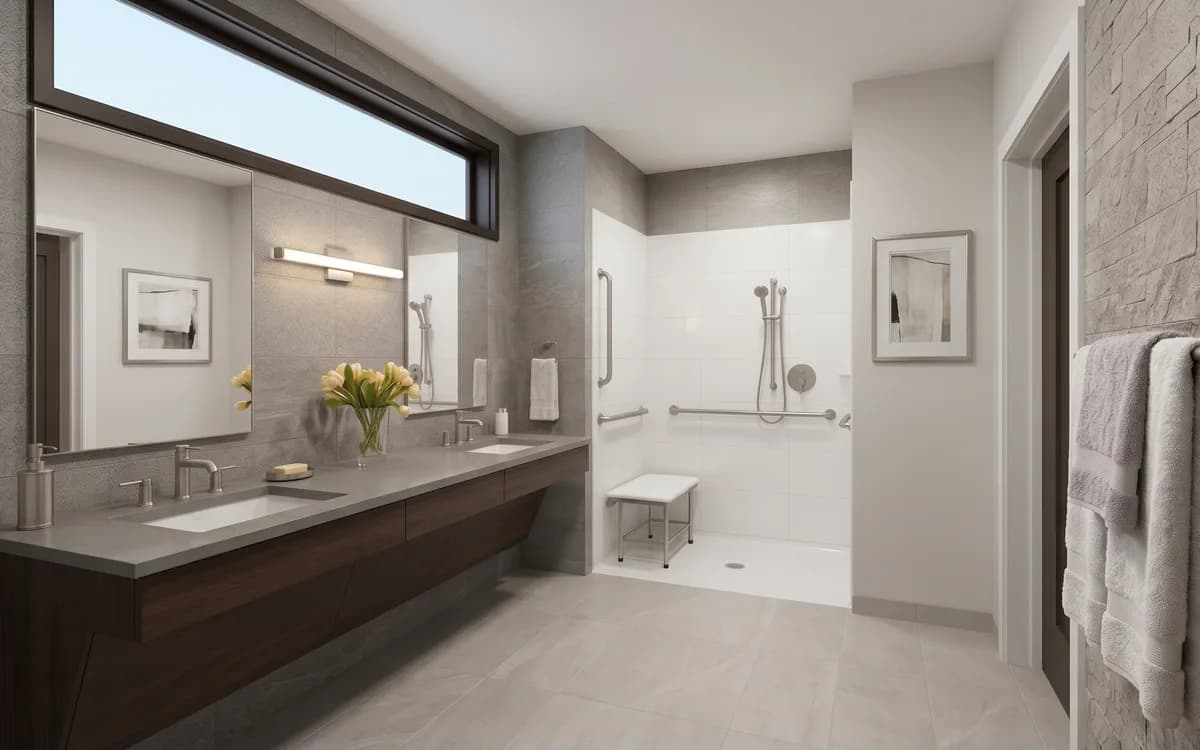
A Safer Bathroom. Your Independence.
The bathroom is where most falls at home happen, and it is also the most inexpensive room to make dramatically safer. A properly anchored set of grab bars takes an afternoon.
Start with grab bars. Almost everyone should.
Bathroom safety gets sold as a renovation decision. It usually should not be. The highest-value change in most bathrooms is three or four correctly placed, correctly anchored grab bars — at the tub entry, inside the shower, and beside the toilet — and that is a few hundred dollars, not several thousand.
Once the bars are in, the real question becomes whether stepping over the tub wall is still workable. If it is, the next step is usually accessories — a bench, a handheld, a toilet at the right height — which cost little and help immediately. If it is not, then it is worth removing the tub for a walk-in shower, and that is a genuine renovation we will describe honestly before you commit to it.
Signs the bathroom needs attention
- Holding the towel bar, the sink, or the shower door for balance
- Stepping over the tub wall has become the hardest moment of the day
- Bathing less often, or waiting for someone else to be home first
- A fall or a slip in the bathroom, even one that caused no injury
- A suction-cup grab bar is currently doing a job it was never rated for
- Getting up from a standard-height toilet takes both arms
Recognize two or more? A free in-home assessment will tell you exactly what fits. No obligation.
Bathroom solutions
Everything is quoted installed. Grab bars are quoted per bar with the anchoring method included — we do not charge extra for finding a stud.
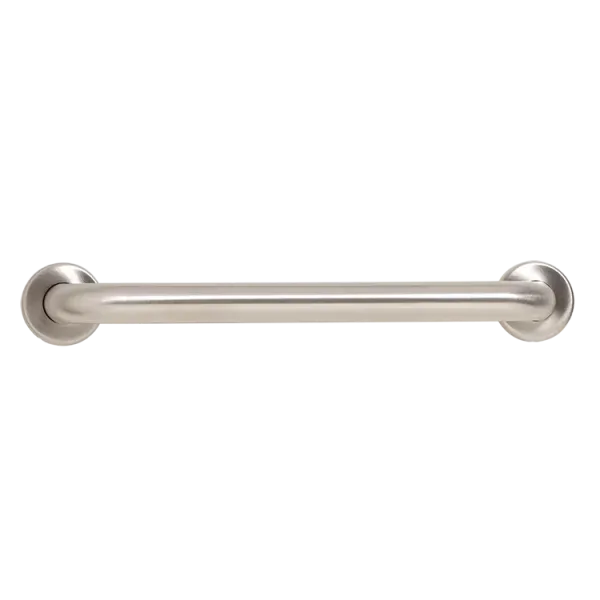
Grab Bars
ADA-compliant stainless and matte-finish bars installed into studs or with reinforcement backing. Next-day available.
Get Quote →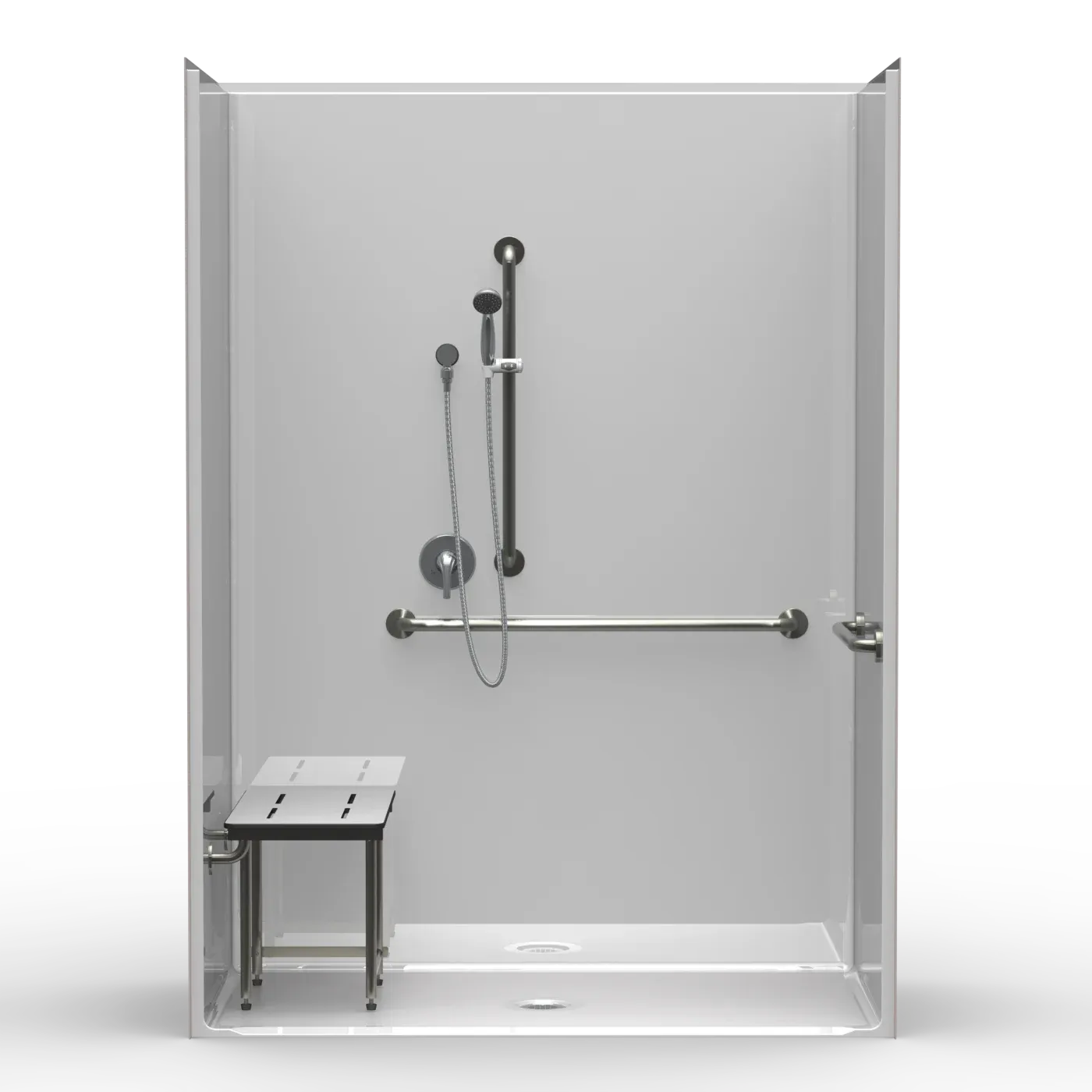
Roll-In Shower
Zero-threshold conversion with fold-down bench and handheld showerhead. Fully tiled to match your existing bathroom.
Get Quote →What separates a safe bathroom from a decorated one
Anchored into structure
Every bar goes into a stud or into blocking we add. Drywall anchors and suction cups fail under exactly the load they are needed for.
Placed for the person
Bar height and angle depend on the user's height, reach, and which side they favor — not on where the tile grout line happens to fall.
Usually one day
Grab bars, a bench, and a comfort-height toilet are an afternoon. A walk-in shower is a genuine renovation and we will say so.
Zero-threshold where it fits
A curbless walk-in shower removes the step entirely, which is the only option that works for a wheelchair user.
It should still look like a bathroom
Brushed and matte finishes that read as fixtures rather than hospital equipment. Safety does not have to announce itself.
One trade, one visit
Plumbing, tile, and anchoring handled together, so you are not coordinating three contractors around one small room.
Where they go matters as much as that they exist.
A grab bar in the wrong place is furniture. The three positions that actually change outcomes are a vertical bar at the tub or shower entry to steady the step over, a horizontal or angled bar on the long wall inside for washing and turning, and a bar beside the toilet on the transfer side.
Anchoring is where most DIY and handyman installations go wrong. A bar rated to 250 lb is only rated to 250 lb if it is fastened into structure. Into drywall with plastic anchors it will hold a towel and fail the first time someone falls onto it — which is the one moment it exists for.
- Vertical bar at the entry for the step over the tub wall
- Angled or horizontal bar on the long wall for balance while washing
- Bar beside the toilet on the user's stronger side
- Fastened into studs or added blocking, never drywall anchors alone
- Never suction cups — they release without warning on wet tile
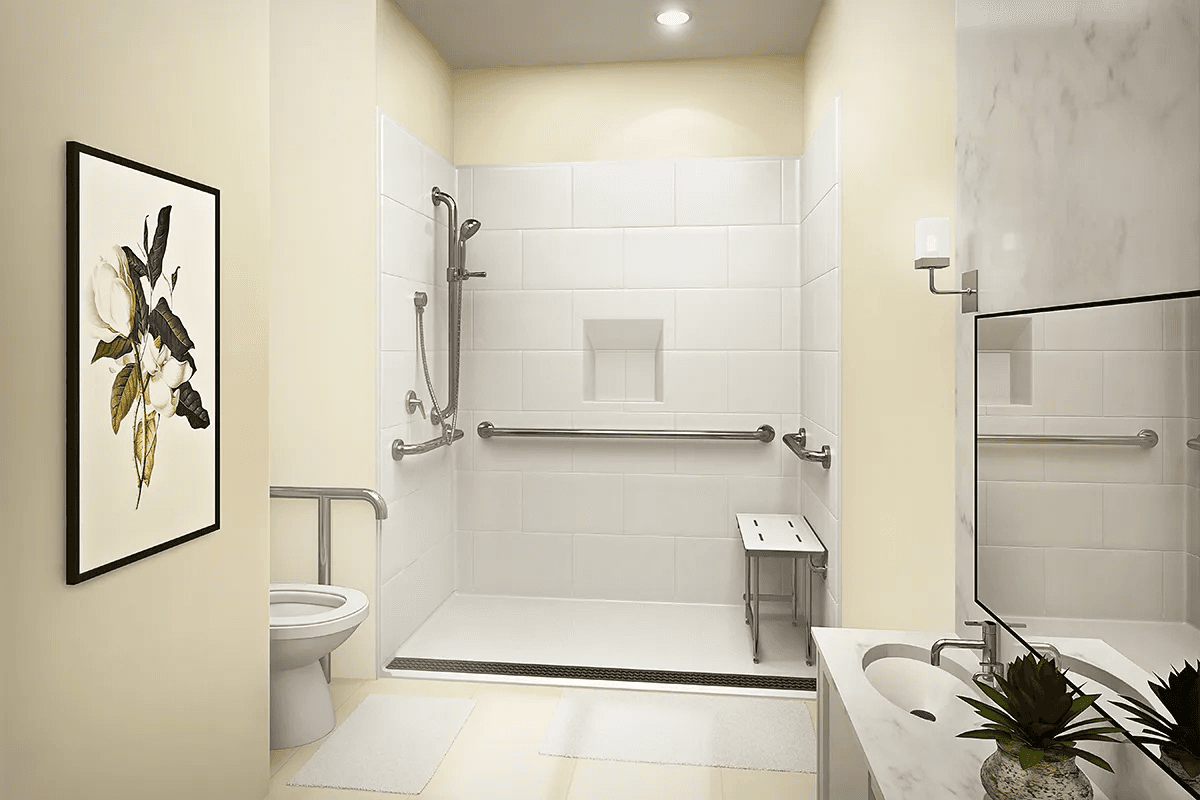
- Zero- or low-threshold entry — no tub wall to step over
- Fold-down bench and handheld on a slide bar as standard
- Curbless entry is the only option that works for a wheelchair user
- A carer can assist without reaching over a tub wall
- Removing a tub means losing the only tub in the house — worth thinking about for resale
Removing the step is the change that lasts.
A walk-in shower takes the tub out and replaces it with a zero-threshold or low-threshold enclosure, normally with a fold-down bench and a handheld on a slide bar. It suits someone who showers rather than bathes, anyone using a wheelchair or a walker, and any household where a carer helps — there is no tub wall between them and the person they are assisting.
It is a real job. The floor is re-sloped, the drain is usually relocated, and the room is out of use while waterproofing and tile go in. What you get for that is the option that keeps working as needs change, rather than one that has to be revisited in three years.
The low cost changes people forget.
Accessories close most of the gap for a fraction of a renovation. A shower bench or a transfer bench means washing happens seated instead of standing on wet tile. A standard 15-inch toilet is a genuine obstacle for weak legs, and a comfort-height fixture at 17 to 19 inches — or a raised seat with support rails — costs little and helps immediately.
And the floor: glossy tile with a bath mat over it is a worse combination than most people realize. Slip-resistant flooring or a properly fixed mat is a small change with a real effect.
- Shower benches and transfer benches for washing seated
- Comfort-height toilet at 17"–19", or a raised seat with support rails
- Handheld shower on a slide bar, usable seated or by a carer
- Lever or single-handle taps for reduced grip strength
- Slip-resistant flooring, and no loose mats
- Better lighting — a large share of nighttime falls come down to visibility
Grab bars, accessories, or a walk-in shower?
| Feature | Grab bars | Bath accessories | Walk-in shower |
|---|---|---|---|
| Relative cost | Lowest by far | Low | High |
| Time on site | A few hours | A few hours | 2–5 days |
| Works for a wheelchair user | Helps with transfers | Helps with transfers | Yes |
| Keeps the bathtub | Yes | Yes | No |
| Carer can assist | Yes | Yes | Yes |
| Lets you wash seated | No | Yes — bench or seat | Yes — fold-down bench |
| Plumbing work | None | Minimal | Yes, including the drain |
If you are unsure, start with grab bars. They help in every one of these scenarios, they cost the least, and they do not foreclose any later decision.
From assessment to a bathroom that works
Smallest change first
We do not publish figures — what is behind your tile decides too much of the number for a website to guess at. But the range across these options is wide, and grab bars sit at the very bottom of it. Start there.
What moves the cost
Questions we get every week
Where should grab bars actually go?
Three positions do most of the work: a vertical bar at the tub or shower entry for the step over, an angled or horizontal bar on the long wall inside for balance while washing, and a bar beside the toilet on the user's stronger side. Exact heights depend on the person, which is why we mark them on the wall with them present.
Are suction-cup grab bars safe?
No. They are marketed as balance aids and they release without warning on wet or textured tile — which is precisely the moment someone is leaning on one. If there is a suction bar in your bathroom now, treat it as decoration until a real one is fitted.
Can grab bars be installed if there is no stud where I need one?
Yes. We add blocking behind the wall so the bar anchors into structure, or use a fastening system rated for the substrate. What we do not do is put a bar into drywall anchors and call it safe.
Do I need a walk-in shower, or will accessories do?
If stepping over the tub wall is still manageable with something solid to hold, a bench and a handheld often solve the problem for a small fraction of the cost. If the step itself is the barrier — or a wheelchair or walker is involved — no accessory fixes that, and a walk-in shower is the honest answer. We will tell you which side of that line you are on.
What bath accessories actually help?
A shower bench or transfer bench so washing happens seated, a handheld shower on a slide bar, and a toilet at the right height — either a comfort-height fixture at 17 to 19 inches or a raised seat with support rails. Together they cost a small fraction of a renovation and they can usually be fitted in an afternoon.
Will removing my only bathtub hurt resale?
It can, particularly for buyers with small children. If it is the only tub in the house, that is worth weighing. If there is a second bathroom with a tub, converting this one to a walk-in shower is usually an easy call.
How long is the bathroom out of use?
Grab bars and accessories: not at all, it is a few hours of work. A walk-in shower: two to five days, and the room is genuinely unusable for most of that. We give you the honest number up front so you can plan.
Explore other solutions
Ready to see what
this would cost?
Book a free in-home assessment. We measure, quote in writing, and leave the decision to you.